The case study page for this account shows the numbers. This post explains what sits behind them: what the business looked like when I started, what I did in what order, and what I would tell another contractor or tourism business that wants a similar result.
The company rents e-bikes and runs guided tours for visitors to a historic Southeast US city. It also repairs bikes and sells merchandise and used bikes. I keep client details anonymous, as I do on every case study, so you will see the numbers and the work but not the name.
Short answer: Between April 2021 and November 2026 the booking platform recorded 4,750 bookings and about $1.12M paid by customers. Organic search is the largest source of engaged website visits, paid search adds steady traffic, and one booking system holds every number. Those figures are in the case study; this post explains how the work fit together.
Where it started in 2021
When I began in 2021, online bookings came to about $200 a month. The business had no booking platform, so there was no single place to see how many people booked, from where or for how much. It needed three things at once: a website that could take bookings, a presence in local search, and a way to buy traffic during peak weeks.
The business is also strongly seasonal. Tourism follows the calendar, so the website, the listings and the ad spend all have to work through the busy months and survive the quiet ones.
The work, in the order it mattered
1. One booking system for everything
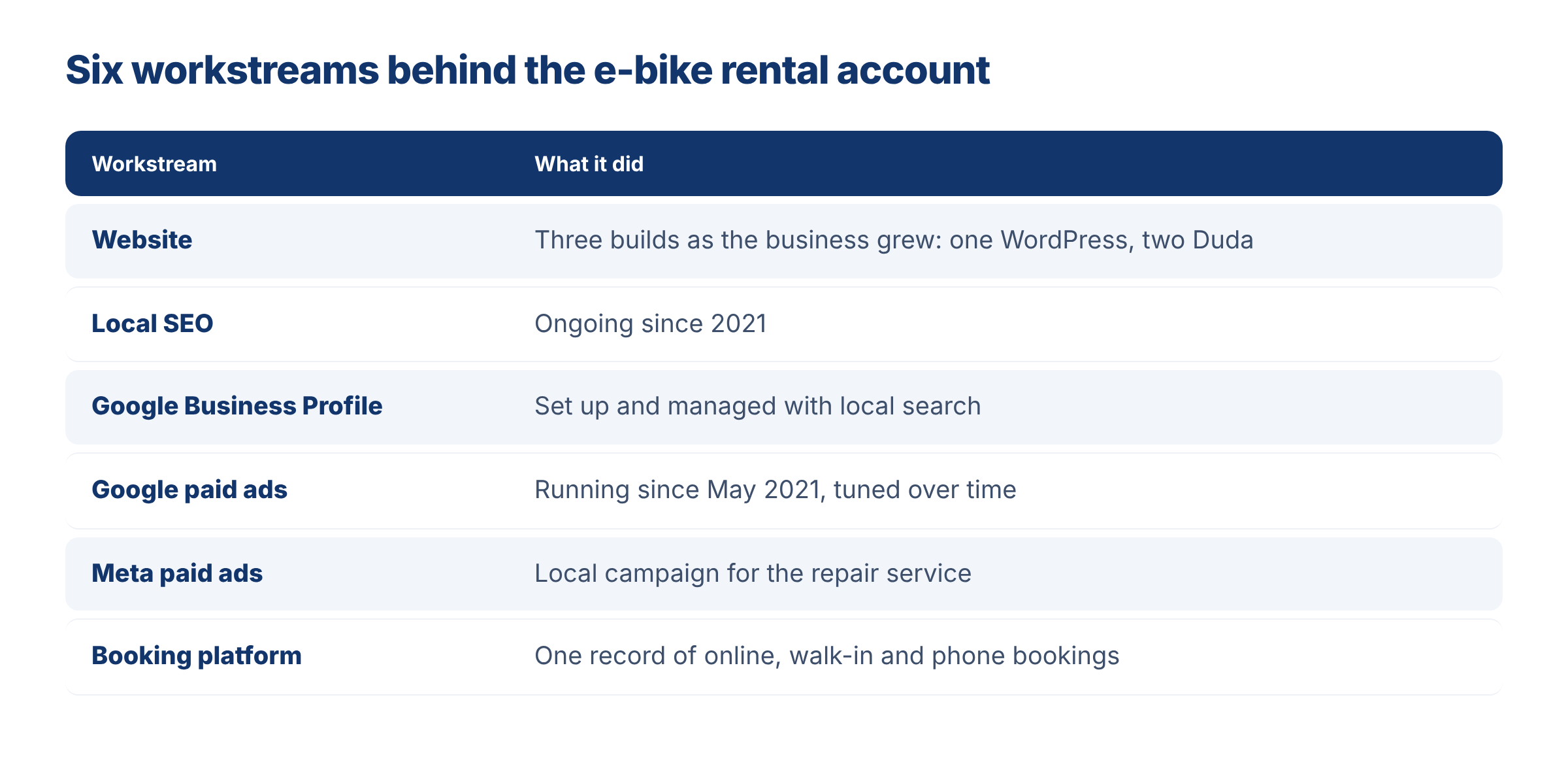
The first decision was not about marketing at all. I set up a booking platform that records online, walk-in and phone bookings in one place. That gave the business one set of numbers. Everything after that, from ad budgets to seasonal planning, could be checked against real bookings instead of guesses. If you take one idea from this post, take that one: pick a single system of record before you try to optimize anything.
2. A website that could take bookings, built three times
The website has been built three times as the business grew: one WordPress build and two on Duda. That is not a failure. Each version matched where the business was, from a first booking funnel to a larger operation with repairs and merchandise. The point of a website for a business like this is the booking path. Visitors should be able to see the options, pick a time and pay without calling.
3. Local search and the Google Business Profile
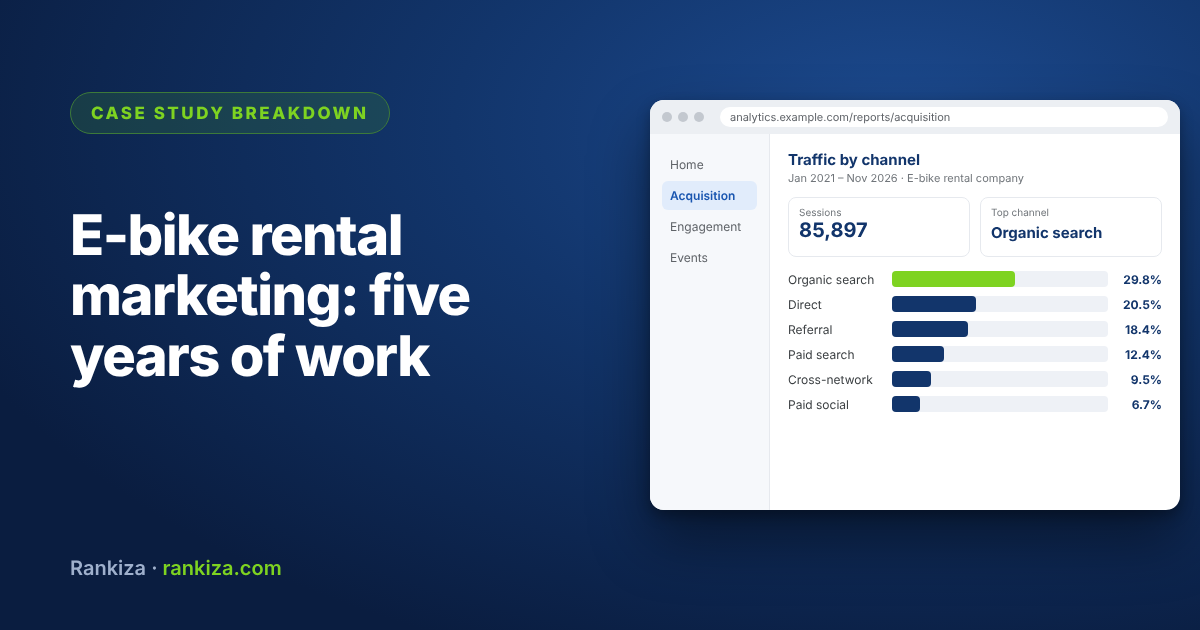
Local SEO has been ongoing since 2021, alongside the setup and management of the Google Business Profile. Over the last 16 months covered in the case study, Google web search sent about 7,090 clicks from roughly 380,000 impressions. In the case study period, organic search is the largest source of engaged sessions at 29.8% of 85,897, and Google Analytics records $74,931 in revenue from it, at no cost per click.
That number is the reason I put local search first on any tourism account. It compounds. A listing and a set of pages that rank well keep working through the quiet months, while ads stop the moment the budget stops. For the setup side, see my Google Business Profile guide.
4. Google paid ads, tuned over time
Paid ads have been running since May 2021. The totals so far are 29,940 clicks at a 7.2% click rate and 2,154 conversions at $27.95 each. Paid search accounts for 12.4% of engaged sessions at about $2.01 per click. The value of paid ads here is timing: they fill peak weeks when demand is high and organic traffic alone cannot catch it. The mistakes to avoid are the ones I describe in the guide to Local Services Ads and Search ads.
5. Meta ads for the repair service
Facebook and Instagram are a poor fit for tourists searching for a rental, but a good fit for locals who need a bike repaired. A local Meta campaign for the repair service produced 353 website contacts at $9.06 each. The website does not track revenue from those contacts, so I count contacts, not sales. I would rather state that limit than imply a sales figure I cannot support.
What the traffic mix says
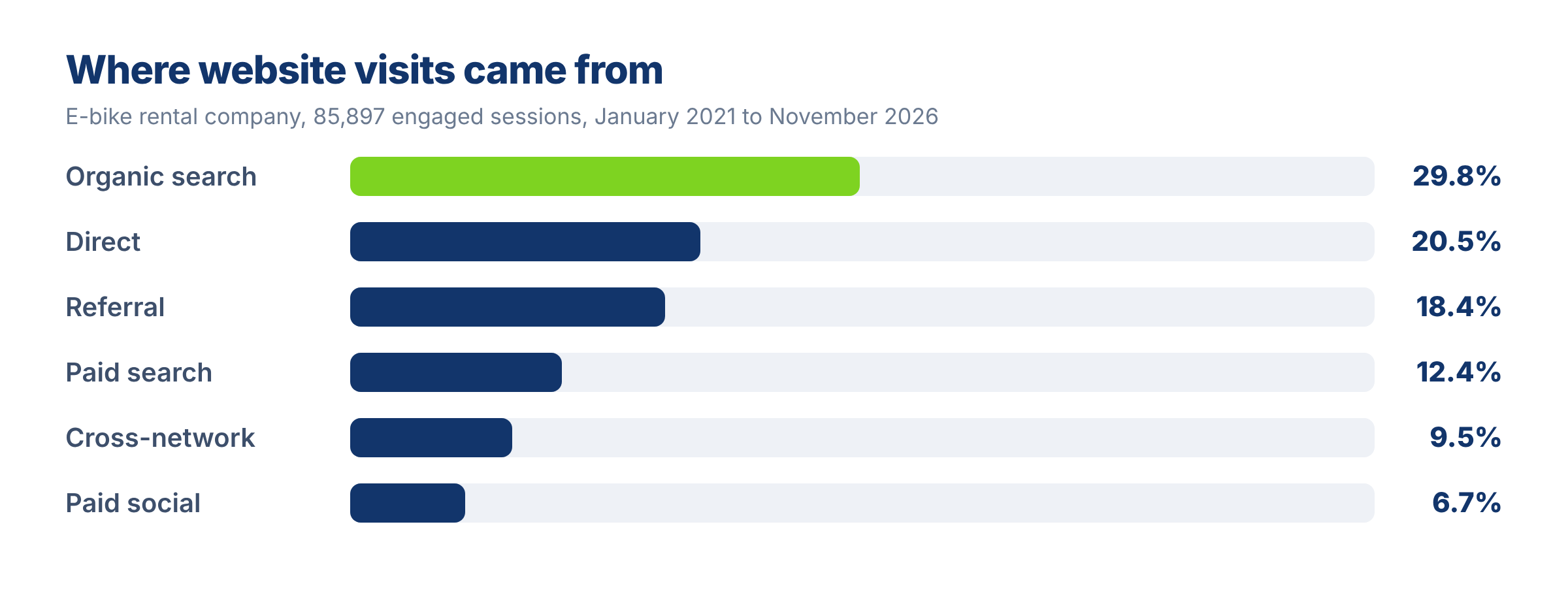
Organic search sits at 29.8%, direct at 20.5%, referral at 18.4%, paid search at 12.4%, cross-network at 9.5% and paid social at 6.7%. The mix shows why a single channel strategy would have been fragile. A tourism business draws from search, from word of mouth, from partner sites and from paid ads, and each of them supports the others.
How to read the numbers
I try to be careful about what these figures cover, and the case study says so in detail. Booking totals come from the booking platform, and customers’ total payments include customer fees. After customer fees, net revenue is about $996K. Payments taken through Square since 2024 are not counted, so the real total is higher. Google, Meta and Search Console figures cover the periods shown next to each. I would rather publish conservative numbers with clear caveats than a bigger number I cannot defend.
What I would tell another business
- Fix measurement before spending. One booking system made every later decision easier.
- Treat local search as an asset. It takes time, and it is the cheapest traffic once it works.
- Use paid ads for timing, not for everything. Peak weeks are where they earn their cost.
- Match the channel to the service. Meta fit the repair shop better than the rental business.
- Expect to rebuild the website. It should evolve with the business.
- Be honest about what you can measure. It makes the numbers more useful.
This is a tourism business, not an HVAC company, so the numbers will not translate directly to a contractor. The structure does: one place for results, strong local search, ads where timing matters and tracking that you can trust. For how I apply the same approach to a contractor’s own numbers, see how to tell if your marketing is working. The full figures are in the e-bike rental case study, and you can see how I work on the how it works page.
What to take from this
- Pick one system that records every booking or job, including walk-ins and phone calls.
- Make sure your Google Business Profile and local search pages are in place before you buy traffic.
- Turn on conversion tracking, then add paid ads for your busiest weeks.
- Review the numbers monthly and note what each figure does and does not cover.
Frequently asked questions
How long does local SEO take to work for a seasonal business?
It builds over months and years rather than weeks. On this account, local search has been ongoing since 2021, and organic search is now the largest source of engaged website sessions.
Should a tourism business use paid ads?
Often yes, for peak periods when demand is high. Paid search brought about 12.4% of engaged sessions on this account at roughly $2.01 per click, alongside organic search and direct traffic.
Why does a booking platform matter for marketing?
It records every booking, including walk-in and phone, in one place. That gives you one set of numbers to judge marketing against instead of relying on website analytics alone.
Are these results typical?
They are the results of one business over five years, so do not treat them as a promise. The approach is repeatable, the numbers depend on your market, your trade and your budget.
I'll check your website, Google profile, phone setup, follow-up, reviews, and ads and tracking. Free, no obligation.
Get my free audit
Growth marketing consultant for US home-service contractors. In digital marketing since 2012, 60+ businesses, $1.4M+ ad spend managed. More about me.